|
|
|
|
|
|
| |
World War I Battles and Battlefields
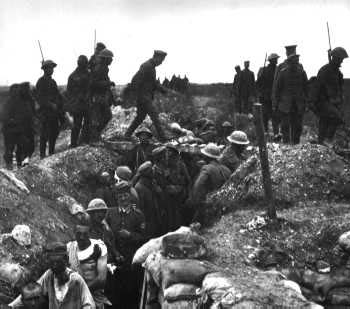
The First World War, often called the Great War, was fought from 1914 to 1918 and produced some of the most costly battles in human history. After rapid movement in the opening weeks, the war on the Western Front settled into a long stalemate of trench warfare, in which opposing armies faced each other across fortified lines stretching from the North Sea to the Swiss frontier.
Several battles came to symbolise the character of the conflict. The Battle of Verdun in 1916 was one of the longest and bloodiest engagements of the war, fought between French and German forces. The fighting in Flanders, including the area remembered through the poem “In Flanders Fields,” saw repeated offensives over waterlogged ground. The Gallipoli campaign of 1915, an Allied attempt to force the Dardanelles in the Ottoman Empire, ended in costly failure. On the Eastern Front, fighting ranged across a more mobile and far broader area between Germany, Austria-Hungary and Russia, while the Balkans, where the war's spark was lit, formed another theatre.
The battlefields of 1914 and 1915, and the great attritional battles that followed, were shaped by new and deadly technology, including machine guns, heavy artillery and poison gas. The enormous casualties for limited territorial gains made the war a byword for futile slaughter. Today these battlefields, with their preserved trenches, monuments and vast military cemeteries, are major sites of remembrance across Europe.
Frequently asked questions
- Why did the Western Front become a stalemate?
- Machine guns, artillery and entrenched defences made attacks extremely costly, so the front settled into static trench warfare with little movement for years.
- What was the Battle of Verdun?
- It was a prolonged 1916 battle between French and German forces, among the longest and most lethal of the war, fought over fortified positions near Verdun in France.
- What was the Gallipoli campaign?
- It was an Allied attempt in 1915 to seize the Dardanelles straits from the Ottoman Empire. The operation failed after heavy losses and was eventually abandoned.
|
|
World war I:
battles  |
|
Battle maps
the great war: maps, Belgium - France, Northwest Europe, Verdun and vicinity,
Peronne and vicinity, Northeast Italy, Ypres, Belgium, Cambrai, France and
vicinity, ... |
| Battles on the Western front, 1914-1918 Mons and the great retreat, battle of the
Marne, battle of Aisne, battle of Ypres, battle of Neuve Chapelle, battles of
Aubers Ridge and Festubert, battle of Loos, Somme offensive, battle of Arras and
Vimy Ridge, battle of Messines, battle of Cambrai, August Offensive (Black day
of the German Army), the Allied Counter-Offensive |
|
Battle
summaries and maps (Eastern front) |
| Grandes
batailles mouvements d’armées, grandes offensives pendant la guerre 1914-18, en Français |
| The Belgian Frontline 1914-1918 on the Yser |
|
World war 1 battles |
|
World
war 1 battlefields ypres, ieper, verdun, beaumont hamel, thiepval,
ovillers, arras, albert, cemeteries, zonnebeke, bullecourt, Passchendaele,
authuille, aveluy, ancre, gasshell, soyecourt, fort du troyon |
| World
war 1 naval combat world war 1 naval warfare including the battle of Jutland, Coronel and the Falklands, the scuttling of the German fleet at Scapa Flow and warships sunk |
|
Worldwar I - battles and batllefields |
|
Battle of Arras
Battle of Arras - Vimy Ridge - World War I |
| Battle of the Falkland islands
Battle of the Falklands |
| Bombardment of Hartlepool - 1914 |
| Brusilov offensive 4 jun 1916 |
| Canadians at Vimy Ridge |
|
Dark Autumn 1916 Zeppelin offensive |
|
De strijd
in Lotharingen en de Vogezen in augustus 1914
in Dutch |
| Gas attack, 1916 |
| Gallopoli: Turkish army at Gallipoli, march Defense & august
counteroffensive, 1915 |
| Gallipoli
The Anzac Landing at Gallipoli - Reports by War Correspondents |
|
Gallipoli 1915 battle at Gallipoli, 1915, world war I, The Battle of
Gallipoli took place on the Turkish peninsula of Gallipoli in 1915 during the
First World War. A combined British Empire and French operation was mounted in
order to eventually capture the Ottoman capital of Constantinople |
| Gallipoli 1915
battle at Gallipoli, 1915 |
|
Gallipoli: battle at Gallipoli, 1915 battle at Gallipoli, 1915 |
|
Gallipoli
campaign |
| Gallipoli landings at Helles and
Anzac Cove, 1915 |
|
Gallipoli: the river Clyde landing battle of Gallipoli |
|
Gorlice-Tarnow battle of Gorlice-Tarnow, 2 may 1915 |
|
Le chemin des dames Les Offensives d’avril 1917, une offensive française,
lancée le 16 avril 1917 sur l'Aisne, en Français |
| Luik: the battle of Liege
the battle of Liege ran for twelve days from 5-16 August 1914, and resulted in surprisingly
heavy losses upon the German invasion force by the numerically heavily outnumbered Belgians |
|
Marne: la
deuxième bataille de la Marne |
|
Marne: second
battle |
|
Passchendaele The Battle of Passchendaele |
|
Passchendaele |
|
Polish-Russian
war 1920 |
|
Somme: battle |
|
Somme: battle fields
the Somme battlefields |
| Somme battles the year 1916 was the year of the Battle of the Somme.
As the year opened, the two great opposing armies remained deadlocked in a line
of trenches which stretched 966 kilometres from the Belgian coast through France
to the frontiers of Switzerland |
| Somme:
the Battle of the Somme the battle of the Somme, 1916, world war one |
|
Somme:
battle of the Somme This interactive map shows the victories, defeats and
painful stalemate, and how the lessons learned paved the way for victory on the
Western Front in 1918 |
|
Tannenberg battle of Tannenberg: 26-30 August 1914, The Battle of Tannenberg
in 1914 was a decisive engagement between the Russian Empire and the German
Empire in the first days of The Great War, fought by the Russian First and
Second Armies and the German Eighth Army between 17 August and 2 September 1914,
... |
|
Tannenberg
battle of Tannenberg |
|
The final
British Cavalry charge Worcestershire Yeomanry November 8th 1917 |
| U-boat attack, 1916 |
|
Vauquois
Dominating the whole area east of the Argonne, Vauquois is considered, by the
general staff of both sides, to be an exceptional observation post and a
strategic bolt |
|
Verdun |
|
Verdun 21 février 1916 - la bataille de Verdun en Français |
|
Verdun 1916
With 143 000 Germans and 163 000 French killed, the battle of Verdun was not the
most murderous confrontation of World War I |
|
Verdun 1916 Battlefield Maps |
|
Verdun: the battle of Verdun 1916 the battle of Verdun lasted ten months. It was a battle in which at least
700.000 men fell, along a front of fifteen miles; whose aim was less to defeat
the enemy than bleed him to death; a battleground whose once fertile terrain
even now resembles a haunted wilderness |
| Verdun |
| Vimy Ridge
beginning 9th april 1917 |
|
World War I
Links |
|
Ypres and the Great War |
|
Ypres: second
battle of Ypres april 22 - may 25, 1915, the Ypres Salient was to be one
of the most fought over areas of the whole war. The second battle is significant
for a number of reasons. It was the only real German offensive on the Western
Front for the whole of 1915 and it was the area where gas was first used as an
affective weapon. Gas had been used on the Eastern Front at Bolimov but the
weather had been so cold that it had frozen |
| Ypres:
battle of Ypres the first battle of Ypres |
| Ypres:
battle of Ypres the third battle of Ypres, 1917 |
|
Ypres: battle of Ypres the third battle of Ypres, 1917 |
|
Ypres battlefield guide |
| Ypres
battlefields: disappearance and discoveries |
|
|
Home
|
Site Map
|
Email: support[at]karadimov.info
Last updated on:
2026-06-24
|
Copyright © 2011-2021 Educypedia.
https://educypedia.org
|
| |
|
|
| |
|