|
|
|
|
|
|
| |
Egyptian history
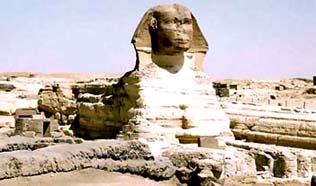
The history of ancient Egypt spans roughly three thousand years, making it one of the most enduring civilizations of the ancient world. Its story begins in the prehistoric communities that settled along the Nile, where farming villages gradually grew into larger societies. Tradition holds that Egypt was first unified when the separate kingdoms of Upper and Lower Egypt were joined under a single ruler, an event that scholars place at the threshold of recorded Egyptian history and the start of its long sequence of dynasties.
Historians divide this long span into broad periods. During the Old Kingdom, central royal power was strong and the great pyramids were built as royal tombs. After a time of disunity, the Middle Kingdom restored stability and saw notable literature and art. The New Kingdom that followed was an age of empire, when Egypt extended its influence abroad and powerful kings raised vast temples; many of the best-known pharaohs belong to this period. Between these high points came intermediate periods of weaker central control.
Throughout its history Egypt's wealth rested on the Nile and its yearly flood, which supported agriculture and a complex administration staffed by officials and scribes. The civilization eventually came under foreign rule, passing to a line of Greek kings after the conquest by Alexander and finally being absorbed into the Roman world. The records the Egyptians left in stone and on papyrus, written in hieroglyphs, allow this long chronology to be traced and remain central to the study of the ancient past.
Frequently asked questions
- How long did ancient Egyptian civilization last?
- It lasted roughly three thousand years, from the unification of Egypt through a long series of dynasties until it was absorbed into the Roman world.
- How is Egyptian history divided?
- Scholars group it into broad eras, chiefly the Old, Middle and New Kingdoms, separated by intermediate periods of weaker central rule.
- What was the New Kingdom known for?
- It was an age of empire and monumental temple building, and many of the most famous pharaohs ruled during this period.
|
|
Miscellaneous
topics about ancient Egypt  |
|
Before the Mummies- Desert Origins of the Pharaohs The Western Desert of
Egypt, near the Dakhleh Oasis, appears to be one of the most uninhabitable
places on the planet, ... |
|
Date converter for
Ancient Egypt this website is a scientific tool for converting calendar
dates mentioned in Greek and Demotic Papyri from Egypt into Julian dates,
from the reign of Psametik to Diocletian |
|
Djed Pillar
The djed pillar, was a roughly cruciform object with at least three cross
bars, but almost always four that became one of the most recognizable
symbols in ancient Egypt |
|
Eunuchs in
Pharaonic Egypt |
|
Giza plateau mapping project
The Giza Plateau Mapping Project, under the direction of Mark Lehner,
Visiting Assistant Professor of Egyptian archaeology at the Oriental
Institute, is dedicated to research on the geology and topography of the
Giza plateau, the construction and function of the Sphinx, the Great
Pyrimids, the associated tombs and temples, and the Old Kingdom town in the
vicinity, ... |
| Het-Hert
history of Hathor's worship in Ancient Egypt, mythology, hymns,
archaeological sites |
| Hierakonpolis
Hierakonpolis, one of the most important archaeological sites for
understanding the foundations of ancient Egyptian society |
| House of
Ptolemy Ptolemy |
| Mataha Expedition
Lost labyrinth of Egypt discovered The Mataha-expedition discovered the
lost labyrinth of Egypt at Hawara. A colossal temple described by many
classic authors like Herodotus and Strabo, to contain 3000 rooms full of
hieroglyphs and paintings |
|
Medicine in Ancient Egypt
Medical Papyri |
|
The great pyramid, the golden ratio and the royal cubit |
| Treasures of the
sunken city explore the map of one of the largest underwater
archaeological sites in the Mediterranean |
| Valley of the Kings
the valley of the Kings, in Upper Egypt, Thebes, the burial place of the
pharaohs of the New Kingdom, 18th, 19th, and 20th Dynasties. To date, more than 62 tombs have been identified |
| Virtual Kahun |
|
Animals and the gods of ancient Egypt |
| Anubis,
the god of embalming |
|
Benu (Bennu) |
|
Coffin art: birds |
|
Lions of Egypt |
|
Egyptian religion |
|
Ancient Egyptian
mythology photographs and paintings of ancient egyptian art, archeology, mythology and dynastic
history |
|
Ancient Egyptian religion |
|
Ancient Egyptian religion |
|
Egyptian mythology
Egyptian mythology |
| Egyptian
myths a tip |
|
Gods of ancient Egypt |
|
Gods of ancient Egypt
Gods and Mythology of Ancient Egypt |
| Phoenician
religion Phoenician religion was inspired by the powers and processes
of nature. Many of the gods they worshiped, however, were localized and
are now known only under their local names |
|
Symbols and gods of Ancient Egypt
dictionary of Ancient Egyptian Religion, Ancient Egypt, Amun, Atum, Ankh,
Anubis, Bast, Bes, Geb, Hapi, Hathor, Horus, Isis, Khepri, Khnum, Khons,
Maat, Min, Montu, Neith, Nephthys, Nun, Nut, Osiris, Ptah, Ra, Re, Sekhmet,
Selket, Set, Seth, Shu, Sokar, Sobek, Tefnut, Thoth, Wadjet, Wedjet Eye |
|
|
Home
|
Site Map
|
Email: support[at]karadimov.info
Last updated on:
2026-06-24
|
Copyright © 2011-2021 Educypedia.
https://educypedia.org
|
| |
|
|
| |
|