| |
Ancient Egyptian art and photographs
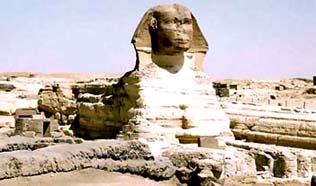
The art of ancient Egypt is instantly recognisable and remarkably consistent across thousands of years. Painting, sculpture and carved relief decorated tombs, temples and monuments, and most of it served a religious or commemorative purpose rather than being made simply for display. Because so much was created to equip tombs and honour gods and kings, a great deal has survived in the dry climate, and photographs of these works and the sites that hold them allow the art to be studied closely.
Egyptian art follows distinctive conventions. Figures in painting and relief are often shown in a composite view, with the head in profile but the eye and shoulders facing forward, a style that aimed to depict each part of the body in its clearest form. The relative size of figures signalled their importance, so a king or god might be drawn far larger than ordinary people. Bright colours, made from mineral pigments, and rows of hieroglyphic text frequently accompany the images, identifying the scene and the figures within it.
Many of the finest works remain at the temples and tombs where they were made. The temple complexes at Luxor and nearby Thebes, the painted tombs in the Valley of the Kings, and the colossal statues and reliefs found across Egypt show gods such as Osiris, scenes of royal life, and depictions of the afterlife. Sculpture ranges from towering statues of pharaohs to small, finely worked figures. Photographs of these monuments and museum pieces preserve a visual record of a tradition that shaped how the ancient Egyptians saw their world.
Frequently asked questions
- Why do Egyptian figures look posed in a particular way?
- Painting and relief often combine a profile head with a front-facing eye and shoulders, a convention meant to show each part of the body in its clearest form.
- What was most Egyptian art made for?
- It mostly served religious and commemorative purposes, decorating tombs, temples and monuments to honour gods and kings rather than for ordinary display.
- Where can ancient Egyptian art still be seen?
- Much survives at original sites such as the temples of Luxor and Thebes and the tombs in the Valley of the Kings, as well as in museum collections.
|
|
Ancient Egypt: photos & art  |
|
Ancient
Egypt photo tour photographs of life along the Nile
River as it was in 1996 A.D., ancient Egyptian monuments and artifacts, the
fascinating world of Egyptian myths and legends. It includes pictures and
descriptions of the gods and goddess, mummies, hieroglyphs |
|
Art of
ancient Egypt the pre-dynastic and early dynastic period, the old
kingdom, the middle kingdom, the new kingdom |
| Cairo
museum hieroglyphs, Egyptian history, cheops, piramide, giza, papyrus,
ancient Egypt |
|
Digital Egypt images of Ancient Egypt from the Petrie museum |
|
Egypt
photos and images from Egypte |
| Egypt
archive FREE photographic archive of Egyptian antiquities |
|
Egypt art
photos and images from Egypte |
|
Egypt photo
gallery |
|
Egyptian holiday |
|
Egyptian monuments descriptions
and photographs of the ancient Egyptian monuments |
|
Egyptian
sculpture in its symbolic formality |
| Images from Egypt
photos and images from Egypte |
|
Museum photography
photographs of the Egyptian Theben desert and temples, Hatshepsut, Kings
Valley, Chicago House, graffiti, Pharaohs, Nile, Karnak temple, Egyptian
desert photographs, landscape and temple photographs of upper Egypt, Luxor
temple, Thebes, Theben, Desert Roads, Wadi Hammamat, Wadi el Hol, Gebel el
Silsileh, Medinet Habu, valley of Ay, valley of the monkeys, Romans, Gods
Wives, Ramses, Thothmoses, Tut Ank Amun, Tutankamun, Tutankhamon, ancient
Egypt, Egyptology, tombs, mummy, mummies, hieroglyph, hieroglyphic, Nile,
Cleopatra, Kleopatra, Ramses, Ramesses, Thothmosis, Tutmosis, Horemheb,
Akhnaten, Akhnaton, Nefertiti, Memnon, Osiris, Amun, Amon, Ra, Re, Cairo,
Gurna, Gurn, Pilgrims, Valley of the Pilgrims, Malkata, Malkada, Dier el
Medina, Seti, Talatat, block fragments, Cushite, Kushite, Ptolymaic,
Ptolymeic |
|
Splendors of ancient
Egypt artifacts from ancient Egypt including jewelry and cartonnage
portraits from the Greco-Roman period |
|
Tutankhamon
and ancient statues |
|
Virtual Egypt an
educational, multimedia resource and community
about ancient Egypt, Egyptology, pyramids, egyptian mummy, mummies,
hieroglyphs, art, artifacts, archaeology, monuments, maps, photo gallery,
egyptology, civilizations, sphinx, hieroglyphics |
|
World art treasures |
|
|
Home
|
Site Map
|
Email: support[at]karadimov.info
Last updated on:
2026-06-24
|
Copyright © 2011-2021 Educypedia.
https://educypedia.org
|
| |
|
|