World War II Photos and Multimedia
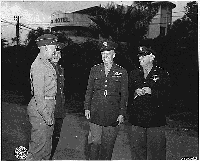
The Second World War was among the most thoroughly photographed and filmed conflicts in history. Cameras carried by official military photographers, war correspondents and ordinary soldiers produced a vast visual record of campaigns, equipment, leaders and civilian life. Combined with maps, newsreels and propaganda films, this imagery remains a primary source for understanding how the war was experienced and how it has been remembered.
Photography served several purposes during the war. Aerial reconnaissance photographs were used to map enemy positions and assess the results of bombing, while combat photographers documented operations for both the historical record and wartime propaganda. Some images became iconic, such as the raising of the American flag on Iwo Jima in the Pacific, and photographs of the Normandy landings, the ruins of bombed cities, and the liberation of concentration camps. Maps, in turn, illustrate the shifting front lines across theatres including France, the Eastern Front and the Pacific island battles such as Midway.
This visual material is now widely held in national archives, museums and online collections, and is frequently reproduced in books and documentaries. Photographs and film must be interpreted with care, since many were staged, censored or produced for propaganda by governments on all sides. Used critically, however, they provide powerful evidence of the scale of the conflict, its battles and its human cost.
Frequently asked questions
- Why is World War II so well documented in photographs?
- Both military organisations and the press employed photographers and film crews, and many soldiers carried personal cameras, producing an enormous visual record of the war.
- What was aerial reconnaissance photography used for?
- It was used to map enemy positions, plan operations and assess bomb damage, making it an important source of military intelligence.
- Should wartime photographs be treated as neutral evidence?
- Not always. Many images were censored, staged or created for propaganda, so they should be interpreted critically alongside other sources.