| |
Electric Lighting
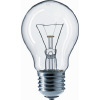
Electric lighting is the use of electrical energy to produce visible light for illumination. The earliest practical electric lamp was the incandescent light bulb, in which current passes through a thin tungsten filament inside a sealed glass envelope. The filament resists the current and becomes hot enough to glow, emitting light along with a large amount of heat. The bulb is filled with an inert gas or evacuated to slow the evaporation of the filament and extend its life. Incandescent lamps are simple and give pleasant warm light, but they convert only a small fraction of their energy into light, which makes them inefficient.
Many other lamp technologies improve on this efficiency. Fluorescent tubes pass current through a low-pressure gas to produce ultraviolet light, which a phosphor coating converts to visible light. Discharge lamps such as sodium and metal-halide types are used for streets and large spaces. Light-emitting diodes (LEDs) generate light directly in a semiconductor junction and have become the dominant technology because they are efficient, long-lived and compact. Each type differs in colour rendering, lifespan and the way it must be controlled.
Powering these lamps requires appropriate wiring. Lighting circuits are usually separate from socket circuits and use conductors sized for the smaller currents that lamps draw. Switches interrupt the line conductor to control lamps, and arrangements such as two-way and intermediate switching allow a single light to be controlled from several points, as on a staircase. Many lamps need control gear: fluorescent and discharge lamps use ballasts to limit current, and LED fittings include drivers that supply a regulated current. Correct earthing of metal fittings and the use of protective devices keep lighting installations safe.
Frequently asked questions
- Why are incandescent bulbs considered inefficient?
- Most of the electrical energy heating the filament is released as heat rather than visible light, so only a small fraction becomes useful illumination.
- What is two-way switching?
- A wiring arrangement that lets the same light be turned on or off from two different switch positions, commonly used at the top and bottom of stairs.
- Why do fluorescent and LED lamps need extra control gear?
- Fluorescent and discharge lamps need a ballast to limit current, while LEDs need a driver to supply a steady regulated current, because neither can be connected directly to the mains like a filament bulb.
|
|
|
Lighting - illumination related topics: (physics)
Color theory,
Optics |
|
Artificial Lighting
Fluorescent lamps, Compact Fluorescent lamps, High
density discharge lamps, Optical performance, Life time, Power supply,
circuitry, Luminous intensity distribution, Luminous flux distribution,
Luminaire efficiency, Luminance distribution, pdf file |
| Bulb museum
Light bulbs, christmas lights and other things that glow- of all ages, shapes,
sizes and origins |
|
Daylighting
Fundamentals, Daylighting, Artificial Lighting, Integrating
Artificial Light and Daylight, pdf file |
|
Éclairage,
photométrie et colorimétrie pdf file,
en Français |
|
Fundamentals of efficient lighting ppt file |
|
Indoor Lighting
Design Introduction to the Lumen Method, Lumen Method Calculations |
|
Integration of Electric Lighting-Daylighting The development of new energy
efficient lighting equipment, The utilization of improved lighting design
practice, The improvement in lighting control systems, pdf file |
| Les joies
de l'éclairagisme en Français |
|
Les lampes Lampes
à incandescence, Lampes halogènes, Tubes fluorescents, Lampe à décharge, Lampe à
vapeur de mercure, Lampe à vapeur de sodium, en Français |
|
Licht
grootheden uitgelegd |
| Light
bulbs
Vacuum vs. gas-filled bulbs, How bulbs burn out, Why bulbs often burn
out when you turn them on, Why burnout is sometimes so spectacular, How bad a
current surge bulbs draw when turned on, Making bulbs last longer, Long-life
bulbs, Reduced power, Soft start devices, DC vs. AC operation |
| Light guides
basic information about lighting concepts, design, technology and policy issues. The intent is to give users fundamental principles and general background on key
lighting topics |
|
Light measurement handbook
electromagnetic wave theory, ultraviolet light, visible light, infrared light,
power of light, light sources, measurement, detectors, filters, radiometer,
flux, irradiance and illuminance, radiance and luminance, intensity |
| Lighting
fundamentals a brief overview of design parameters, technologies, and terminology used in the lighting industry |
|
Lighting
fundamentals This document provides a brief overview of design parameters,
technologies, and terminology used in the lighting industry, pdf file |
|
Lighting info site hints and lighting related info,
Educypedia |
|
Light sources
Arc lamps, Incandescent lamps, Electroluminescent (EL) lamps, Gas discharge
lamps, High-intensity discharge lamps |
|
Lighting technologies Light efficiency comparison, pdf file |
| Mike's Electric Stuff |
| Museum of historic discharge lamps |
|
Principles of lighting
Light and Vision, Visibility Influences, Open-plan Office Lighting Problems,
Types of Lighting in Open-plan Offices |
|
Synthlight and color handbook
Daylighting, Artificial Lighting, Integrating
Artificial Light and Daylight, pdf file |
| Verlichting
gloeilamp, TL lamp, ..., in Dutch, pdf file |
Illumination topics  |
|
Ballasts
HID Ballasts: High Reactance type, HID Ballasts: Reactor Type, Instant Start
Ballasts, Lead/Lag Ballasts, Preheat Ballasts, Series Sequence Ballasts,
scroll down |
|
Ballasts
Instant Start Ballasts |
| Brightness, luminance,
and confusion |
|
Color temperature
the color temperature model is based on the relationship between the temperature
of a theoretical standardized material, known as a black body radiator, and the
energy distribution of its emitted light as the radiator is brought from
absolute zero to increasingly higher temperatures,
Educypedia |
|
Elektromagnetisch spectrum in Dutch |
|
High intensity discharge lamp ballasts pdf file |
|
High-intensity discharge lamp, dimming systems pdf file |
| How to wire 3-way
and 4-way switches how to wire 2 or 3 switches to control the same light,
Educypedia |
|
Inrush current |
|
Instant
start ballasts instant start ballast schematic |
|
Lighting design
glossary absorption, A process by which incident radiant flux is converted
to another form of energy, usually (and ultimately) heat, accent light,
Directional lighting designed to emphasize a particular object or to draw
attention to a part of the field of view, ... |
|
Lighting Glossary |
|
Lux
a measure of
the intensity of light, ... |
|
Lux, Lumen and
Watts, What’s the Difference? pdf file |
|
Spectral Power Distribution curves (SPD) provide the user with a visual
profile of the color characteristics of a light source |
|
Ultraviolet and UV lamps |
| Ultra violet licht in Dutch |
|
Watts and lumens
what
is the difference between watts and lumens? pdf file |
|
|
|
|
Home
|
Site Map
|
Email: support[at]karadimov.info
Last updated on:
2026-06-24
|
Copyright © 2011-2021 Educypedia.
https://educypedia.org
|
| |
|
|