|
|
|
|
|
| |
Types of Electric Lamp
Electric lamps fall into a few broad families that produce light in very different ways. Incandescent bulbs heat a tungsten filament until it glows; they are inexpensive but inefficient. Gas-discharge lamps, by contrast, create light by passing an electric current through a gas or vapour, exciting its atoms so that they emit light. Two prominent members of the discharge family are the neon sign and the fluorescent lamp, both of which rely on a sealed tube containing a low-pressure gas and electrodes at each end.
Neon signs are made from glass tubes bent into letters and shapes and filled with a noble gas at low pressure. When a high voltage is applied across the electrodes, the gas ionises and glows. Pure neon gives the familiar orange-red light, while other gases and gas mixtures, often combined with coloured or phosphor-coated glass, produce blues, greens and many other colours. A neon-sign transformer supplies the high voltage needed to strike and sustain the discharge. Skilled glass bending and gas filling make neon a craft as much as a technology.
Fluorescent lamps use a similar discharge but optimise it for efficient general lighting. The tube contains a low-pressure mixture of an inert gas and a little mercury vapour. The discharge produces mostly ultraviolet light, which strikes a phosphor coating on the inside of the glass and is re-emitted as visible white light. Different phosphor blends set the colour temperature, from warm to cool white. A ballast limits the current and provides the starting voltage. Fluorescent lamps are far more efficient than incandescent bulbs, which is why they were long used in offices, schools and shops before LED lamps became widespread.
Frequently asked questions
- How do neon signs make different colours?
- Different noble gases and gas mixtures emit different colours, and coloured or phosphor-coated glass tubing further alters the light, so a range of hues is possible beyond neon's natural orange-red.
- Why does a fluorescent lamp have a white coating inside?
- The discharge produces mainly ultraviolet light. The phosphor coating absorbs the ultraviolet and re-emits it as visible white light, and the phosphor mix sets the colour temperature.
- What is a ballast for?
- A ballast limits the current through a discharge lamp and supplies the voltage needed to start it, because the lamp itself cannot safely be connected directly across the supply.
|
|
Illumination types  |
| Bicycle
lighting - driving lights |
|
Black lights
Black lights, Black Light is high-frequency UltraViolet (UV) light. Black Light
sources are labeled "Black Light", "Black Light Blue" or "BLB", ... |
| Black lights: how they work |
|
Discharge Tube Discharge Tube, pdf file |
|
Electronic Ballast for
Fluorescent Lamps to understand the role of ballast in fluorescent lighting
systems and the advantages of fluorescent lamps driven by electronic ballast
over the conventional incandescent lamps, pdf file |
|
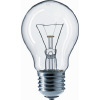
Glass bulb
Incandescent light bulbs consist of a glass enclosure (the envelope, or bulb)
which is filled with an inert gas to reduce evaporation of the filament and
reduce the required strength of the glass. Inside of the bulb is a filament of
tungsten wire, through which an electrical current is passed |
|
Halogen lamp |
|
HALOGEEN <VS> XENON |
|
High
Intensity Discharge |
|
High-intensity discharge lamp |
|
High intensity discharge lamp ballast for automotive headlamp pdf file |
| High pressure
sodium lamps |
|
How Camera
Flashes Work |
|
Incandescent bulbs |
|
Lava
lamp |
| Lava
lamp |
|
Lava
Lamp Animation |
| Lava
lamps Lava lamps |
|
Lava
lamp simulation Lava lamp simulation |
|
Low-pressure mercury lamp A low-pressure mercury lamp (LP Hg lamp) is a
highly efficient UV light source of short wavelength, ... |
|
Metal halide lamp
HQI® metal halide lamps |
|
Metal halide lamp pdf file |
| Metal halide lamp
drawing Metal Halide Lamps: The Halide Cycle in a Discharge Lamp |
|
Metal halide lamps
of all the lamps in the high-intensity discharge (HID) family, the metal halide family of lamps has the brightest future. These lamps offer much higher
efficiency than mercury vapor lamps and better light quality than either mercury or sodium lamps |
| Neon
lamp |
|
Neon Sign Background
How neon sign is made , Background, Raw materials, Design |
| Neon glow lamps
contains some applications of neon glow lamps, which are very common components that can do more than simply produce a weak light,
Educypedia |
| Neon
signs Neon signs are produced by the craft of bending glass tubing into
shapes. A worker skilled in this craft is known as a glass bender, neon or tube
bender, neon designs, neon sign transformers |
|
Neon
signs A neon sign is a very simple device. It consists of a vacuum-tight
glass tube, fitted at each end with an electrode. Inside the tube is a small
amount of rare gas. Connected to the two electrodes is a source of high-voltage
electrical power, ... |
|
Neon versus LED and other
Light Sources Comparison of Various Lighting Sources, Output Efficiency,
Color Range, & Lifespan |
| Neon vs fluorescent light
a neon light is the sort of light you see used in advertising signs, a fluorescent light, on the other hand, is most often a long,
straight tube that produces white light. You see fluorescent lights in offices, stores and some home fixtures |
|
Sodium lamp low pressure sodium lamp |
|
Sodium lamp low pressure sodium lamp |
|
Sodium lamp low pressure sodium lamp, pdf file |
|
Sulfur lamp |
|
Sulphur Lights
Electrodeless Microwave-Driven Sulphur Lamp |
|
Sulphur Plasma Lamps |
|
Xenon Flash Lamps Technical Information Xenon Flash Lamps Technical
Information, pdf file |
|
|
Home
|
Site Map
|
Email: support[at]karadimov.info
Last updated on:
2026-06-24
|
Copyright © 2011-2021 Educypedia.
https://educypedia.org
|
| |
|
|
| |
|