| |
Optical and Light Sensors
Optical sensors detect light and convert it into an electrical signal. They rely chiefly on the photoelectric and photoconductive effects, in which photons striking a material free charge carriers or change its conductivity. Because light covers a range from infrared through visible to ultraviolet, optical sensors are designed with a spectral response matched to the wavelengths of interest, whether for measuring ambient brightness, detecting a beam, or reading data from an optical medium.
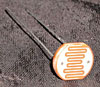
Several detector types are in common use. The light-dependent resistor (LDR), or photoresistor, lowers its resistance as illumination increases and is simple and inexpensive but slow. Photodiodes generate a current proportional to incident light and respond quickly, making them suitable for communication and precise measurement. Phototransistors add internal amplification for greater sensitivity, and avalanche photodiodes provide internal gain for very low light levels. Photocells based on the photovoltaic effect generate a voltage directly when illuminated.
Optical sensors underpin many applications: automatic lighting and camera exposure control, optical encoders for position and speed, barcode and disc reading, infrared remote-control receivers, and laser-based measurement such as laser Doppler velocimetry. They are frequently paired with a light source, such as an LED or laser diode, to form an emitter–detector pair that senses reflection, transmission or interruption of a beam. The choice of detector depends on the required speed, sensitivity and the wavelength of the light involved.
Frequently asked questions
- What is the difference between a photodiode and an LDR?
- A photodiode produces a current proportional to light and responds quickly, while an LDR simply changes resistance with illumination and reacts much more slowly.
- Why use an avalanche photodiode?
- It provides internal gain through avalanche multiplication, making it useful for detecting very low light levels where an ordinary photodiode would be too insensitive.
- What does the spectral response of an optical sensor mean?
- It describes how strongly the sensor responds at different wavelengths, so a sensor is chosen to match the infrared, visible or ultraviolet light it must detect.
|
|
Optical
sensors  related subjects: Optics,
Photodiode,
LED, Fibers
related subjects: Optics,
Photodiode,
LED, Fibers |
|
Barcode Sensors |
|
Capteurs optiques pdf file,
en Français |
|
CdS
Photocell Series Construction and Characteristics of CdS Cells,
pdf file |
|
Color Sensor
Color Sensor circuit |
|
Digital optical encoder
a digital optical encoder is a device that converts motion into a sequence of digital pulses. By counting a single bit or by
decoding a set of bits, the pulses can be converted to relative or absolute position measurements. Encoders have both linear and rotary configurations, but
the most common type is rotary, Gray code |
|
Fiber Optic Detector detectors perform the opposite function of light emitters. They
convert optical signals back into electrical impulses that are used by the
receiving end of the fiber optic data,
pdf file |
|
LDR
LIGHT/DARK ACTIVATED RELAY SWITCH using an LDR to turn on a relay, pdf file |
|
Light Pollution Meter
Light Pollution Meter, Notes on the design and construction of a visual
comparison photometer for measuring sky brightness and light pollution |
|
Light Sensor The Light Sensor is a high sensitivity sensor to measure light
intensities in the range of 0 to 10 lux,
pdf file |
|
Optical microsensors
pdf file |
|
Opto electrische
sensoren in Dutch,
pdf file |
|
Opto sensors
opto
sensor consists of a light emitting element which transforms an electrical
signal to an optical signal, and a light receiving element which transforms the
optical signal to an electrical signal. Both of these elements are housed in one
package, making the opto sensor essentially a non- contact switch |
|
Photo-conductive Cell
Photocells are thin film devices made by depositing a
layer of a photoconductive material on a ceramic substrate. Metal contacts are
evaporated over the surface of the photoconductor and external electrical
connection is made to these contacts,
pdf file |
|
Photodiode
A photodiode is a p-n junction or p-i-n structure. When light of sufficient
photon energy strikes the diode, it excites an electron thereby creating a
mobile electron and a positively charged electron hole, ... |
|
Photoelectric
and ultrasonic tutorial photoelectric and ultrasonic sensing |
|
Photoelectric
Sensor Terminology pdf file |
|
Photocells
photoresistors (photocells) are simply variable resistors in many
ways similar to potentiometers, except that the resistance change in light level
rather than by turning a knob. Photoresistors can be used as light sensors,
which can enable robot behaviors such as hiding in the dark, moving toward a
beacon, etc. |
|
Photodetectors
Photomultiplier, Photomultiplier operation, Sensitivity, pdf file |
|
Photonic detectors |
|
Photoresistor
A photoresistor is an electronic component whose resistance decreases with
increasing incident light intensity. It can also be referred to as a
light-dependent resistor (LDR), or photoconductor, ... |
|
Position Sensing Detectors Position Sensing Detectors, photodiode, pdf file |
|
RGB Color
Sensors Understanding RGB Color Sensors, pdf file |
| Thick-film photosensors
Thick-film photosensors, Ink formulation, Screen printed photoresistors,
Photoconductive position sensors |
|
Typical Applications for Phototransistors and IREDs |
|
|
Home
|
Site Map
|
Email: support[at]karadimov.info
Last updated on:
2026-06-24
|
Copyright © 2011-2021 Educypedia.
https://educypedia.org
|
| |
|
|