| |
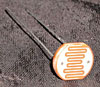
RTD – Resistance Temperature Detectors
A resistance temperature detector (RTD) measures temperature by exploiting the fact that the electrical resistance of a metal rises in a predictable way as it gets hotter. A current is passed through the metal element and the resulting resistance is measured; from a known resistance–temperature relationship, the temperature is calculated. Platinum is the preferred material because its resistance changes in a very nearly linear and highly repeatable manner over a wide range, and because it resists corrosion and chemical attack.
The most common RTD is the Pt100, which has a resistance of approximately 100 ohms at 0 degrees Celsius. Its resistance increases steadily with temperature, and standardised tables and a defined temperature coefficient allow the reading to be converted accurately. RTDs offer excellent long-term stability and accuracy, generally better than thermocouples, though they respond more slowly and operate over a more limited high-temperature range. A related variant, the Pt1000, behaves identically but with ten times the nominal resistance.
Because the measured resistance is small, the resistance of the connecting lead wires can introduce errors. To overcome this, RTDs are often wired in three-wire or four-wire configurations that cancel the lead resistance, giving a more accurate reading. RTDs are widely used in industrial process control, laboratory instruments and HVAC systems wherever stable, accurate temperature measurement is required.
Frequently asked questions
- Why is platinum used in RTDs?
- Platinum has a nearly linear, highly repeatable resistance–temperature relationship and resists corrosion, giving stable and accurate measurements over a wide range.
- What resistance does a Pt100 have at 0 degrees Celsius?
- About 100 ohms, which is the reference point from which its temperature-dependent resistance is calculated.
- Why are RTDs sometimes wired with three or four wires?
- To cancel the resistance of the connecting lead wires, which would otherwise add error to the small resistance being measured.
|
|
Pt100 transducer - RTD  |
|
Measuring Temperature
with RTDs This tutorial introduces and explains the concepts and techniques
of measuring temperature with an RTD or Thermistor |
|
Platinum 100-Ω RTD Table
Platinum RTD 100 ohm table, pdf file |
|
Platinum
Resistance Thermometers Platinum Resistance Thermometers, pdf file |
|
Platinum RTDs PLATINUM RTD RESISTANCE VS. TEMPERATURE FUNCTION, pdf file |
|
Positive Analog
Feedback Compensates PT100 Transducer the basic characteristics of
common temperature sensors, describes the RTD PT100 temperature transducer, and
explains a simple analog approach for linearizing and conditioning the output of
that device |
|
Precision
interface for a Resistance Temperature Detector (RTD)
Resistance Temperature
Detectors (RTDs) are temperature sensors that make use of the temperature
dependence of a metal's resistance. They are used in a wide variety of
temperature measurement and control instrumentation. These circuits are based on
using a 100W Platinum RTD (PRTD), versions of which are readily available from
many sources |
|
Precision Temperature
Measurement using RTDs (Resistance Temperature Detectors), pdf file |
|
Precision Temperature
Measurement using RTDs This application note focuses on circuit solutions
that use Platinum RTDs in the design, pdf file |
| Pt100 Pt100, en Français |
| Pt100 pdf file,
LA VALEUR OHMIQUE DES P.T. 100 SELON LA TEMPERATURE |
|
Pt100
temperature sensors Pt100 temperature sensors, this article reviews the
basic characteristics of common temperature sensors, describes the RTD PT100
temperature transducer, and explains a simple analog approach for linearizing
and conditioning the output of that device |
|
Resistance Temperature
Detector pdf file |
|
Resistance-Temperature
Detectors Sensitivity, Response Time, Construction, Signal Conditioning,
Dissipation Constant, Range |
|
Resistance-Temperature
Detectors Resistance Temperature Detectors, also known as RTD's, are wire
wound and thin film devices which incorporate pure metals or certain alloys that
increase in resistance as temperature increases and, conversely, decrease in
resistance as temperature decreases. RTDs are similar to thermocouples in that
they convert changes in temperature to voltage signals by the measurement of
resistance |
|
RTD
RTD,
resistance temperature detector, The fundamental concept of temperature
dependent resistance in metal conductors, pdf file |
|
RTD
RTD,
resistance temperature detector, A resistance temperature detector (RTD)
operates on the principle that electrical resistance of metal changes as its
temperature changes. The resistance of the sensing element increases as the
temperature rises, pdf file |
|
RTD
RTD, resistance temperature detector, Precision Temperature-Sensing With RTD Circuits, pdf file |
|
RTD Resistance
Temperature Detectors Lead Configurations of RTD Probes, Platinum Resistance
Elements, Allowable Deviation from Calibration Values |
|
RTD Tolerances,
Classes and Comparisons Platinum RTD Tolerance Values, RTD Resistance Wire
Comparisons |
|
Thermistors and RTDs A platinum resistance temperature detector (RTD) is a
device with a typical resistance of 100 W at 0°C, RTD Overview, Measuring
Temperature with RTDs, Which NI Products Can I Use with RTDs?, Programming
Considerations for RTDs, Thermistor Overview, Measuring Temperature with
Thermistors, RTD/Thermistor Measurement Systems, RTD Overview,
Educypedia |
|
What Is an RTD
An RTD (Resistance Temperature Detector) is basically a temperature sensitive
resistor. It is a positive temperature coefficient device, which means that the
resistance increases with temperature, pdf file |
|
|
|
|
|
|
|
|
|
|
|
|
|
|
|
|
|
|
|
|
|
|
Home
|
Site Map
|
Email: support[at]karadimov.info
Last updated on:
2026-06-24
|
Copyright © 2011-2021 Educypedia.
https://educypedia.org
|
| |
|
|