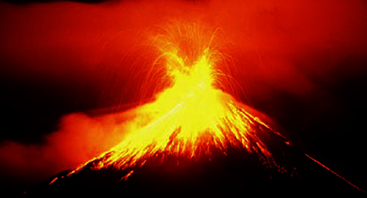
Volcano and geyser animations
Volcanoes and geysers are dramatic surface expressions of heat within the Earth, and animations help explain processes that take place largely underground. A volcano forms where molten rock, called magma, rises from deep below the surface. Animations typically show magma collecting in a chamber, forcing its way up through a conduit, and erupting as lava, ash and gas. They can illustrate why some eruptions flow gently while others are explosive, a difference that depends largely on how thick and gas-rich the magma is.
Geysers are a kind of hot spring that periodically erupts a column of hot water and steam. An animation of a geyser shows groundwater seeping into a network of underground channels near a heat source, often related to volcanic activity. As the deep water is heated above its normal boiling point under the pressure of the water above it, steam eventually forms, pushes water out of the top, lowers the pressure, and triggers a sudden burst. After the eruption the system refills and the cycle repeats.
Visual animations are well suited to these subjects because the key action is hidden beneath the ground and unfolds over time. By revealing a cross-section and animating the movement of magma or water, they connect the visible event at the surface to its underground cause. Such material fits within the wider study of geology and the Earth, showing how internal heat shapes the landscape through volcanism, hot springs and geysers in regions where conditions allow them to form.
Frequently asked questions
- What makes a volcano erupt?
- Magma rising from below builds up pressure and forces its way to the surface; how explosive the eruption is depends largely on the magma's thickness and gas content.
- How does a geyser work?
- Groundwater in underground channels is heated above boiling by a nearby heat source until steam forms and abruptly forces a column of water and steam out of the ground.
- Why are animations useful for these topics?
- The important processes happen underground and over time, so a moving cross-section links the visible eruption at the surface to its hidden cause.