Animations of Geological Disasters
Natural disasters with geological causes are difficult and dangerous to study in the field, so animations play an important part in explaining how they develop. Visual sequences can show the build-up of stress along a fault, the moment of rupture, and the way energy then spreads outward, helping to connect an abrupt event to the slow processes that made it possible.
Earthquake animations typically illustrate how tectonic plates lock together and then slip, sending out seismic waves that travel through the ground at different speeds. Related visualisations show how a sudden movement of the sea floor can displace a column of water and generate a tsunami, a series of long waves that travel across the open ocean almost unnoticed before growing steep and destructive as they reach shallow coastal water.
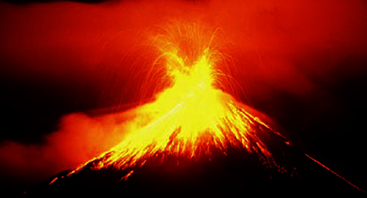
Other animations cover volcanic eruptions, depicting the rise of magma, the role of dissolved gases in driving explosive activity, and the flow of lava and ash. Flood sequences show how heavy rainfall, snowmelt or storm surges can overwhelm rivers and coastlines. By slowing the action and exposing hidden cross-sections of the crust or the water column, these resources make the chain of cause and effect visible. They are used alongside real seismic and meteorological data to teach how such hazards arise and why certain regions are especially at risk.
Frequently asked questions
- What triggers a tsunami?
- Most tsunamis are caused by undersea earthquakes that suddenly shift the sea floor and displace a large volume of water. Underwater landslides and volcanic eruptions can also generate them.
- Why do earthquakes happen along faults?
- Faults are fractures where blocks of crust move relative to each other. Stress builds as the blocks try to slide but stick, and an earthquake occurs when they finally slip and release that energy as seismic waves.
- What makes some volcanic eruptions explosive?
- Explosive eruptions are usually driven by thick, gas-rich magma. As the magma rises and pressure drops, dissolved gases expand rapidly, fragmenting the magma and ejecting ash and rock.