| |
Mechanical Engineering
Mechanical engineering is the discipline that applies the principles of physics and materials science to the design, analysis and manufacture of machines and mechanical systems. It is one of the broadest engineering fields, drawing on mechanics to predict how forces act on bodies, on thermodynamics to govern energy and heat, and on materials science to ensure components withstand the loads placed on them. The result spans everything from small precision mechanisms to engines, turbines, vehicles and large industrial plant.
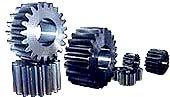
A core part of the subject is the study of machine elements — the standard components from which mechanisms are built. Gears transmit rotation and change torque and speed; bearings allow shafts to turn with minimal friction; pulleys, belts, cams, levers and joints transfer and redirect motion and force. Understanding how these elements combine into linkages and mechanisms allows engineers to convert one kind of motion into another, such as turning rotation into reciprocating movement in a piston engine.
Mechanical engineering also encompasses fluid behaviour and motion through air and liquids. Hydraulics uses pressurised fluid to transmit force and power, while aerodynamics studies the forces of lift and drag on bodies moving through air, important for vehicles and aircraft. Related concerns include vibration, which can cause fatigue and noise if uncontrolled, the strength of materials under load, and the use of tools such as wind tunnels to test designs before they are built.
Frequently asked questions
- What does a mechanical engineer do?
- Mechanical engineers design, analyse and build machines and mechanical systems, applying physics and materials science to ensure they function reliably under their intended loads.
- What are machine elements?
- They are the standard building blocks of mechanisms, such as gears, bearings, pulleys, cams and joints, which transmit and transform motion and force.
- Why is vibration a concern in machine design?
- Uncontrolled vibration can cause fatigue failure, noise and wear, so engineers analyse and damp it to keep machines durable and quiet.
|
|
| Mechanical engineering related subjects
Physics: mechanics, Automotive |
| Adept scientific
technical, scientific engineering topics, Classical
mechanics advanced Newtonian mechanics, a tip |
|
Data about the design and selection of mechanical drive components Belt
Drives Download 555K belt & chain drives, basic electricity, bearings, couplings, gears, gear
trains & speed reducers, motors, micromotors, shafts, springs, constant
force, vibration and shock mounts, engineering reference tables |
|
a online resource of engineering formulas, science
formulas, math formulas, physics formulas, chemistry formulas, tables,
glossary of terms related to computer engineering, manufacturing technology,
mechanical engineering, agricultural engineering, electronics engineering,
metallurgy and machining processes |
|
Engineering
education notes |
| Engineering education fluid dynamics, ideal flow machine, virtual shock tube, compressible aerodynamics calculator, converging
diverging nozzle simulator, thermodynamics of air, boundary layer applets + convection, heat conduction applets, vortex panel method, Mohr's circle applet, beam analysis, resultant of vectors, dynamics,
motion on curved paths, projectile motion |
|
How
technologies work This module is about technology: How human-made
products work, how they are constrained by science and society, and how
technology impacts on society |
|
Marine engineering |
|
Mechanics of Materials mechanics of materials, strength of materials,
deformation, stress, strain, torsion, bending, flexure, normal, shear,
transverse, beam deflections, superposition, pressure vessels, combined
loads, stress transformations, Mohr's circle, strain transformations,
principal stress, composite beams |
|
Unit Operations
in Food Processing Material and energy, balances, Fluid-flow theory,
Fluid-flow applications, Heat-transfer theory, Heat-transfer applications,
Drying, Evaporation, Contact-equilibrium, processes, Mechanical,
separations, Size reduction, Mixing |
Mechanical engineering:
topics  |
| Autocad tutorials,
cad, related info: autocad computer |
|
Bridges bridges, tension, bending, torsion,
ppt file,
Material choices and beam bending ppt file |
|
Bridges
forces that affect bridges, compression, tension, bending, torsion, shearing |
| Coupling seminar
general information on selecting and utilizing general purpose couplings |
|
Friction The Force of Resistance |
|
Friction
ppt file |
|
Friction
ppt file |
|
Friction
Rolling Friction |
|
Friction and drag |
|
Physics on an incline plane |
| Staal:
plooien, lassen, snijden, verzinken, lasers, staalsoorten
klik op technische fiches, in Dutch |
|
Torque In
physics, torque can be thought of informally as "rotational force". Torque
is commonly measured in units of newton meters |
|
Torque
Calculating Torque in a Geared System, moment of a force |
|
Torque
Torque is a turning force or twisting force distinctly different from
"tension" which is a straight pull |
| Torque and
rotational motion Torque is a measure of how much a force acting on an
object causes that object to rotate |
|
Torsion torsion, ppt file |
| Ultrasonic
metal welding free online and downloadable book |
| Vibration
the simplest vibratory system can be described by a single mass connected to a spring (and possibly a dashpot). The mass is allowed to travel only
along the spring elongation direction |
|
|
Home
|
Site Map
|
Email: support[at]karadimov.info
Last updated on:
2026-06-24
|
Copyright © 2011-2021 Educypedia.
https://educypedia.org
|
| |
|
|