Genetics and embryology
Genetics is the study of heredity — how characteristics are passed from parents to offspring — while embryology studies how a fertilised egg develops into a new organism. The two subjects meet at fertilisation, where the genetic contributions of two parents combine to direct the building of a new individual. Both fields involve processes that unfold step by step over time, which animations can present more clearly than fixed diagrams.
The instructions for inheritance are carried by DNA, a long molecule organised into genes, each of which influences one or more traits. Genes are packaged into chromosomes, and an organism normally carries two copies of each chromosome, one inherited from each parent. Sex cells are produced by meiosis, a special division that halves the chromosome number so that, when an egg and sperm join at fertilisation, the normal number is restored. The way different versions of a gene, called alleles, combine and are expressed follows the patterns first described by Gregor Mendel, including dominant and recessive inheritance.
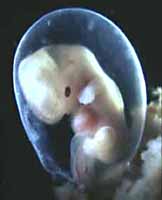
After fertilisation, the single cell formed begins to divide repeatedly. Early divisions produce a ball of cells that gradually organises itself, with cells specialising into the tissues and organs of the developing embryo. Assisted reproduction techniques such as in vitro fertilisation, in which egg and sperm are combined outside the body, rely directly on this understanding of how fertilisation and early development proceed.
Frequently asked questions
- What is the difference between a gene and DNA?
- DNA is the molecule that stores genetic information. A gene is a specific segment of DNA that carries the instructions affecting a particular trait.
- Why is meiosis important for inheritance?
- Meiosis halves the chromosome number when making sex cells, so that fertilisation restores the full number and each parent contributes half of the offspring's genes.
- What happens after fertilisation?
- The fertilised egg divides repeatedly, and its cells gradually specialise to form the tissues and organs of the developing embryo.