| |
Geological Disasters
Geological disasters are sudden, often destructive events that originate in natural Earth processes. They include earthquakes and the tsunamis they can trigger, river and coastal floods, snow avalanches, and unusually large ocean waves. Although these hazards differ in their mechanisms, they share a common feature: energy that accumulates gradually is released quickly, frequently with little warning and serious consequences for people living nearby.
Earthquakes occur when stress built up along faults in the crust is released as the rock slips, sending seismic waves through the ground. When such a movement happens beneath the sea, it can displace a vast volume of water and generate a tsunami — a train of long waves that crosses the open ocean at high speed and grows steep and dangerous in shallow coastal water. Floods arise when rivers overflow after heavy rain or rapid snowmelt, or when storm surges push seawater inland. Avalanches send masses of snow, sometimes mixed with rock and debris, sliding rapidly down steep slopes.
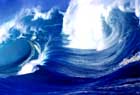
The open sea can also produce freak or rogue waves, exceptionally tall waves that rise unexpectedly from the surrounding sea state and can endanger ships. Once regarded as sailors' legend, they are now recognised and measured by instruments. Understanding all of these hazards relies on monitoring networks, historical records and an appreciation of local geology and weather, which together support warning systems, building standards and land-use planning aimed at reducing loss of life.
Frequently asked questions
- How is a tsunami different from a normal wave?
- Ordinary waves are driven by wind at the surface, while a tsunami is set off by a sudden displacement of water, often by an undersea earthquake. Tsunami waves carry energy through the whole water column and have very long wavelengths.
- What is a rogue or freak wave?
- It is an unusually large and steep wave that appears suddenly amid otherwise smaller seas. Such waves can be hazardous to ships and are now confirmed by direct measurement.
- What causes most river floods?
- River floods usually result from prolonged or intense rainfall, rapid snowmelt, or both, which deliver more water than a channel can carry. Storm surges and dam failures can also cause flooding.
|
|
|
Anatomy of
an avalanche animation |
|
Avalanches
many people get killed every year because of
avalanches |
|
Avalanches
tutorial, Avalanche Encyclopedia, Avalanche Danger Scale |
| Earthforces
earth science, plate tectonics, volcano, earthquake, tsunami, floods |
|
Earth watching
Cyclones, Earthquakes, Fires, Floods, Oil Slicks, Volcanoes, photos from
space |
| Freak waves
freak waves are waves that can raise 60 meters in height from a calm sea to destroy ships are in existance, researchers told. Many tought it was mysterious but tides seem to change. Growing evidence
including satellite images, shed light in to these stories |
| Freak waves,
part of
Power of waves animated |
| Freak waves
freak waves, rogue waves, extreme waves and ocean wave |
| Savage
earth if our planet is a sleeping giant, it slumbers fitfully, slowly and insidiously, earthquakes, volcanoes, tsunamis, and other natural disasters. Highlights include animated illustrations |
| Savage
earth animations page hot zones, volcanic eruption, collision zone animation, mid-ocean ridge animation, subduction animation |
| Wave simulator and
freak waves |
Floods  |
|
Earth observatory: real time flood map |
|
Floods a
flood appears, when more water is coming in than the ground and plants can take up. Water can come in through rains, rivers, broken dams and smelting
snow. Most people die because of the coastal floods |
|
Floods
a flood typically occurs when a river (or other body of water) overflows its
banks |
|
Flood warnings |
|
Floods alert |
| Lynmouth flood of 1952 |
|
Sedimentary evidence favouring the formation of rogen landscapes by outburst floods |
|
|
Home
|
Site Map
|
Email: support[at]karadimov.info
Last updated on:
2026-06-24
|
Copyright © 2011-2021 Educypedia.
https://educypedia.org
|
|
| |
|