Machines and Motors in Animation
Animated models of machines and motors reveal the internal workings of devices that convert energy from one form into useful motion. Because the moving parts of an engine or motor are usually enclosed and operate rapidly, a simulation that slows and exposes the action makes the sequence of events comprehensible: how fuel or current is converted into force, how that force is transmitted through linkages, and how the cycle repeats to produce continuous rotation.
Heat engines feature prominently. A reciprocating internal-combustion engine draws in a fuel and air mixture, compresses and ignites it, and uses the expanding gases to drive a piston, whose motion the crankshaft converts into rotation; animations show the intake, compression, power and exhaust strokes in turn. Gas turbines instead burn fuel in a continuous flow, spinning a turbine wheel, while the idealised Carnot engine illustrates the theoretical limit on how efficiently heat can be turned into work between two temperatures.
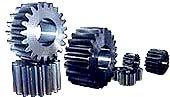
Beyond heat engines, simulations cover the mechanisms that transmit and modify motion, including gear trains that change speed and torque, cam-and-follower arrangements that produce timed movement, and valve gear that coordinates an engine's operation. Such models tie together thermodynamics, which governs the conversion of heat into work, and mechanics, which governs how the resulting forces are transmitted, giving a unified picture of how a machine turns stored energy into reliable mechanical output.
Frequently asked questions
- How does a four-stroke engine work?
- It repeats four strokes — intake, compression, power and exhaust — drawing in and igniting a fuel mixture so the expanding gases drive a piston that turns the crankshaft.
- What is the difference between a reciprocating engine and a turbine?
- A reciprocating engine uses pistons moving back and forth, while a turbine extracts energy from a continuous flow of gas spinning a wheel.
- Why do machines use gear trains?
- Gear trains change the speed and torque of rotation, letting a motor's output be matched to the load it must drive.