Educypediathe educational encyclopedia
Science
Automotive
Biology
Biology-anatomy
Biology-animals
Biology-botany
Chemistry
Climate
Geography
Geography-geology
Mathematics
Mechanics
Physics
Physics-Energy
Space
 
Experiments
Chemistry experiments
Energy experiments
Physics Experiments
 
Utilities - Tools
Automotive-animations
Biology-animations
Calculators-online
Chemistry animations
Climate-weather
Energy production
Geography- Geology
Human anatomy
Math-animations
Mechanics-animations
Miscell. - animations
Physics-animations
Science databank
Space-animations
 
Local sitemap
Sitemap


Coral Reefs

Coral reefs are underwater structures built by colonies of tiny marine animals called coral polyps. Each polyp secretes a hard skeleton of calcium carbonate, and over many generations these skeletons accumulate into the massive limestone formations that make up a reef. Reefs grow slowly, often over thousands of years, in warm, clear, shallow tropical and subtropical seas where sunlight can reach the corals.

Many reef-building corals owe their success to a partnership with microscopic algae called zooxanthellae that live within their tissues. The algae photosynthesise and supply much of the coral's food, while the coral provides shelter and nutrients. This relationship depends on stable, warm but not overheated water; when corals are stressed, they may expel the algae and turn white, a process known as coral bleaching. Reefs are among the most biologically diverse environments in the ocean, providing food and habitat for fish, molluscs, crustaceans and countless other organisms, which is why they are often compared to rainforests in their richness.

Beyond their ecological value, coral reefs protect coastlines from wave erosion, support fisheries and draw the interest of physical oceanography and marine ecology, fields that also study features such as deep-sea hydrothermal vents. Reefs are sensitive to changes in water temperature, acidity and pollution, and many are protected within marine sanctuaries to help conserve their ecosystems.

Frequently asked questions

Are corals plants or animals?
Corals are animals. Each coral is a colony of small polyps related to sea anemones and jellyfish, though many host photosynthetic algae inside their tissues.
What causes coral bleaching?
Bleaching occurs when stressed corals expel the symbiotic algae that give them colour and much of their food, often because water has become too warm. Prolonged bleaching can kill the coral.
Why are coral reefs important?
They support enormous marine biodiversity, sustain fisheries, protect shorelines from waves and erosion, and are valued for tourism and scientific study.

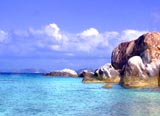


Coral reefs 
A Reef Manager's Guide to Coral Bleaching
Coral reef alliance
Coral Reef Biology A coral reef is a type of biotic reef that develops in tropical waters by the growth of coralline algae, hermatypic corals, and other marine organisms, ...
Coral Reef Ecosystem Assessment and Monitoring Database
Coral reef images Database of free coral reef images
Coral Reef Photo Monitoring Survey Images
Coral reef video clips A resource of free coral reef video clips for educational use
Coral Reefs Coral Reefs are home to over 25 percent of all marine life and are among the world's most fragile and endangered ecosystems, ...
Coral reefs northeasten Australia the greet barrier reef is actually more than 2800 coral reefs
Coral reefs U.S. Geological Survey's Coral Reef Studies website, unique ecosystems of plants, animals, and their associated geological framework
Coral Reefs Classified by Potential Threats
Coral Reefs of the U.S. Virgin Islands the coral reefs around St. Thomas, St. John, and St. Croix
Corals and coral reefs Corals and coral reefs
ReefBase: a global data base reefbase is an online information system on coral reefs, and was designed to provide relevant data and information to reef managers and scientists, as well as the general public
The state of the great barrier reef
Tropical oceans & coral reefs a reef is a coral community consisting of several thousand organisms living together. Although it looks like a dormant underwater bush, the reef is very much alive. Reefs grow very slowly over time. In fact, an inch of coral reef takes nearly 100 years to grow

Home | Site Map | Email: support[at]karadimov.info

Last updated on: 2026-06-24 | Copyright © 2011-2021 Educypedia.

https://educypedia.org


Powered by ITCom Solutions