| |
Animals of the World
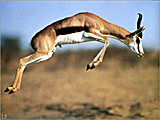
Many of the world's familiar large mammals are hooved animals, which walk on hardened toes called hooves. They are divided broadly into odd-toed groups, such as horses and rhinoceroses, and even-toed groups, such as cattle, deer, antelope, and pigs. Most are plant-eaters that spend much of the day grazing or browsing, and many have digestive systems adapted to extract nutrients from tough vegetation.
Living in herds is common among hooved animals and offers protection, since many watchful eyes make it harder for predators to approach unnoticed. Speed and stamina are important defenses, and the long legs of many grazers are built for sustained running across open country. On the African plains, large herds of antelope and other grazers support a community of predators that depend on them for food. Some hooved animals, known as ruminants, have specialized multi-chambered stomachs that ferment plant material and allow them to digest grasses that other animals cannot use efficiently.
Hooved mammals are only one part of the animal kingdom, which also includes carnivores, primates, birds, reptiles, amphibians, fish, and countless invertebrates. Each group has its own adaptations, and the relationships among them, as predators, prey, and competitors, shape the ecosystems they share. Habitat loss threatens many species, and conservation efforts work to safeguard those at risk.
Frequently asked questions
- What are hooved animals?
- They are mammals that walk on hooves, hardened structures at the tips of their toes. The group includes horses, cattle, deer, antelope, and rhinoceroses.
- Why do grazing animals live in herds?
- Living in a herd improves safety, because many animals watching together are more likely to spot predators, and numbers offer some protection to individuals.
- What is the difference between grazing and browsing?
- Grazing means feeding mainly on grasses near the ground, while browsing means feeding on leaves, twigs, and shoots of shrubs and trees.
|
|
|
|
|
H 
|
| Hamsters
biologie van de hamster, in
Dutch
|
| Harbor
seals |
|
Hawks |
|
Hawks |
|
Hawks, falcons &
vultures |
| Hedgehog:
European hedgehog page |
| Hedghogz
any small nocturnal insect-eating mammal of the genus Erinaceus, esp. E.
europaeus, having a piglike snout and a coat of spines, and rolling itself
up for defence |
| Hemichordata:
of sawblades and acorns |
|
Himalayan tahr |
| Honden:
doggy.net rashonden, rasverenigingen, fokkers, hondenshows, verzorging, on-line dierenarts, homeopatie, raskeuze, opvoeding, rassen, rashonden, hondenkennels, pups, puppies, dierenpensions, dierenhotel,
dierenpension, hondentraining, hondenrassen, rasbeschrijving, in
Dutch
|
| Honden
rassen links in
Dutch
|
| Horses
breeds of horses
|
| Horses
2
|
| Horses:
wild horses of Mongolia
|
|
Hummingbird Hummingbird |
| Hyena
pages
spotted hyenas
|
|
Hyena
pages Spotted Hyenas: some facts and photos, The Brown Hyena, Brown
Hyenas: some facts and photos, The Aardwolf, The Evolution of the Hyena
family, Folklore about Hyenas |
| Hyena
pictures
|
| Hyena:
spotted hyena crocuta crocuta |
| Hyaena
Specialist Group website Hyaenidae refers to the family of extinct and
living hyaenas (called 'hyenas' in North America). Although the hyaena
family once contained a large number of species, only four members of the
family persist on earth today |
|
|
Home
|
Site Map
|
Email: support[at]karadimov.info
Last updated on:
2026-06-24
|
Copyright © 2011-2021 Educypedia.
https://educypedia.org
|
| |
|
|