| |
Animals of the World
Animals make up the biological kingdom Animalia, a vast group of multicellular organisms that obtain energy by consuming other organisms rather than producing their own food. They range from microscopic invertebrates to the largest whales, and inhabit nearly every environment on Earth, from deep oceans and polar ice to deserts and rainforests. Zoologists estimate that well over a million animal species have been described, with many more still unidentified, especially among insects and other small invertebrates.
To make sense of this diversity, biologists group animals using a hierarchy of categories — kingdom, phylum, class, order, family, genus and species. A first broad division separates vertebrates, which possess a backbone, from the far more numerous invertebrates, which do not. Vertebrates include fish, amphibians, reptiles, birds and mammals, while invertebrates include arthropods such as insects, spiders and crustaceans, along with molluscs, worms and many other phyla. Some classifications also recognise single-celled groups such as the Alveolata when discussing the broader tree of life.
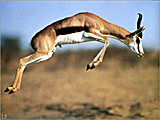
Animals show enormous variation in body plan, diet and behaviour. Some, such as antelopes, alpacas and many birds like the auk, are familiar grazers and foragers, while predators such as the alligator or the green anaconda occupy the top of their food chains. Studying animals involves anatomy, physiology, ecology and evolution, and increasingly the conservation of species whose habitats are shrinking. Africa, with its large mammals and rich birdlife, is one of many regions where wildlife illustrates how varied animal life can be.
Frequently asked questions
- What is the difference between vertebrates and invertebrates?
- Vertebrates have an internal backbone and skeleton; invertebrates lack a backbone. Invertebrates, such as insects and worms, vastly outnumber vertebrate species.
- How many animal species are there?
- More than a million species have been formally described, but the true number is far higher because many invertebrates remain undiscovered.
- What does the kingdom Animalia include?
- It includes all multicellular animals, from sponges and insects to fish, birds and mammals, that consume organic material for energy.
|
|
|
|
|
A 
|
|
Aardvark Aardvark
(Orycteropus afer) is a medium-sized mammal native to Africa |
|
Aardvark Aardvark
(Orycteropus afer), Aardvark (Earth pig, Ant bear) |
|
Aardvark
Biology of the Aardvark (Orycteropus afer), pdf file |
| Actinopterygii
brilliant, spiny, and poisonous lionfish is just one of the world's 20,000
living species of actinopterygians
|
|
Adders |
|
Adders
in Dutch |
| African golden cat
is a medium sized cat and can grow to 90cm in body length and weigh up to 18kg
|
|
African golden cat |
|
African golden cat |
| Albatross
the wandering albatross (Diomedea exulans Linnaeus) is perhaps the
world's most spectacular seabird, and its wing span of three metres makes
it the largest of all albatross species |
|
Albatross
Laysan Albatross - Diomedea immutabilis |
|
Alligator
mississipiensis alligators are remnants of a prehistoric era. When
dinosaurs became extinct, these modern day contemporaries of dinosaurs
continued to flourish and have survived their prehistoric relatives into
the 20th century |
| Alpaca
alpacas are a domesticated member of the camel (camelid) family. The
camelid family also includes llamas, guanacos, and vicunas from South
America, and the Bactrian and Dromedary camels from Asia and Africa |
| Anaconda
largest-known snake in the world |
|
Anaconda
green anaconda |
| Ant
base access to all the ant species of the world, one of the
ecologically most important groups of animals worldwide |
| Antcam
with not one but two live camearas, where you can see as well as learn
about ants |
| Ant
colony facts,
photomicrographs and photos of ants
|
|
Antelope |
|
Antelope list |
|
Antelope overview bushbuck, duiker, eland, impala, klipspringer, kudo, hartebeest, lechwe, oribi, puku,
reedbuck, roan, sable antelope |
| Ants
ants are members of the family of social insects meaning that they live in
organized colonies. Ants make up the family of Formicidae of the order
Hymenoptera (myrmecology: scientific study of ants) |
| Ants:
Australian ants online
|
|
Ants:
Japanese ants |
|
Ants:
Japanese ants Japanese ant color image database
|
| Apes:
African primates at home
photos, audio, and information about wild monkeys and apes
|
| Apes: Great
Ape Distribution of the World |
|
Apes: THE GREAT APES The impact of infrastructural development on
bonobo, chimpanzee and gorilla habitats, the impact of infrastructural
development on orangutan habitats in South-east Asia,
pdf file |
| Apicomplexa
|
| Aplacophora
|
|
Arachnology
home page
the study of arachnids (spiders, scorpions and their relatives), acari, amblypygi,
araneae, opiliones, palpigradi, pseudoscorpiones, ricinulei, schizomida, scorpiones,
solifugae, uropygi (thelyphonida)
|
|
Arctic
geese Arctic Goose |
|
Armadillo
Pictures, geographical information, anatomical images, and ecology of all
known armadillo species, Nine-banded Armadillos, Giant Armadillo, Hairy
Armadillos, Six-banded Armadillo, Pink Fairy Armadillos, Three-banded
Armadillos, Naked-tailed Armadillos, Pichi |
|
Armadillo |
|
Armadillo
Giant Armadillo, Priodontes giganteus |
|
Armadillo
The beautiful armadillo, Dasypus bellus |
|
Armadillo
Nine-banded Armadillo, Dasypus novemcinctus |
|
Asiatic cat
Thai cat |
|
Asiatic golden cat |
|
Asiatic golden cat |
| Atlantic
geese
|
|
Armadillo |
|
Armadillos
The Biogeography of the Nine-Banded Armadillo (Dasypus novemcinctus) |
|
Aurochs |
| Aves the birds
|
|
|
Home
|
Site Map
|
Email: support[at]karadimov.info
Last updated on:
2026-06-24
|
Copyright © 2011-2021 Educypedia.
https://educypedia.org
|
| |
|
|