| |
The Endocrine System
The endocrine system is the network of glands that produce hormones, chemical messengers released into the bloodstream to regulate the body's activities. Unlike the nervous system, which signals rapidly through nerves, the endocrine system acts more slowly and over longer periods, controlling processes such as growth, metabolism, reproduction, and the body's response to stress. Hormones travel through the blood and act on distant target organs that carry receptors for them.
The system includes several major glands. The pituitary gland, a small structure at the base of the brain, releases hormones that direct many other glands and is itself governed by the hypothalamus, a region of the brain that links the nervous and endocrine systems. The thyroid gland in the neck regulates the body's metabolic rate, and the nearby parathyroid glands help control calcium levels. The adrenal glands, sitting atop the kidneys, produce hormones involved in stress and in balancing salt and water.
Other organs contribute as well. The pancreas releases insulin and other hormones that regulate blood sugar, in addition to its digestive role. The reproductive glands, the ovaries in women and the testes in men, produce sex hormones that govern reproduction and the development of sexual characteristics. The pineal body in the brain influences daily rhythms, and the thymus plays a part in maturing certain immune cells. Because hormones coordinate so many functions, disorders of the endocrine glands can affect the whole body, producing conditions related to hormone excess or deficiency.
Frequently asked questions
- What is a hormone?
- A hormone is a chemical messenger made by an endocrine gland and carried in the blood to target organs, where it regulates functions such as growth, metabolism, and reproduction.
- What does the pituitary gland do?
- The pituitary, at the base of the brain, releases hormones that control many other glands. It is itself directed by the hypothalamus, which links the brain to the endocrine system.
- How does the endocrine system differ from the nervous system?
- The nervous system signals quickly through nerves, while the endocrine system acts more slowly through hormones in the blood, producing effects that can last longer.
|
|
Endocrine system  related topics: Biochemistry
 |
|
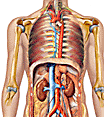
Anatomy of the endocrine system
hormones, testis, thyroid gland and parathyroid glands, pineal body, pituitary gland, hypothalamus, thymus, T-lymphocytes, pair of adrenal
glands, pair of kidneys, woman's ovaries, pancreas |
|
Anatomy of the endocrine system
Endocrine System Introduction, Hypothalamus, Pituitary Gland, Thyroid Gland,
Parathyroid Glands, Adrenal Glands, Pineal Body, Reproductive Glands |
|
Biochemistry
medical biochemistry, developmental biology |
|
Biological
chemistry |
|
Endocrine organs Endocrine organs are organs whose cells secrete their
products, i.e., hormones, into the bloodstream whereas exocrine organs such
as sweat glands, salivary glands and sebaceous glands secrete their products
into a duct system, ..., The thyroid gland, The parathyroid gland, The
adrenal glands, the Adrenal Cortex, The pituitary gland or hypophysis, The
Adenohypophysis, The Neurohypophysis |
| Endocrine system
the endocrine system is instrumental in regulating mood, growth and development, tissue function, and metabolism, as well as sexual function and reproductive processes. In
general, the endocrine system is in charge of body processes that happen slowly, such as cell growth. Faster processes like breathing and body movement are
monitored by the nervous system |
|
Endocrine system the endocrine system uses chemical messengers called hormones that are transported by the circulatory system (blood),
Endocrine Vs Nervous System |
| Endocrine system
atlas of the endocrine system, Hypothalamus, hormones, testis, thyroid gland and parathyroid glands, pineal body, pituitary gland, hypothalamus, thymus, T-lymphocytes, pair of adrenal
glands, pair of kidneys, woman's ovaries, pancreas, deseases |
| Endocrine system Endocrine System Overview, Endocrine Disruptors, Endocrine Disruptor
Screening Program, Endocrine Disruptor Screening, Program History, Glands
located throughout the body, Hormones (i.e., chemical messengers) that are made
by the glands and released into the bloodstream or the fluid surrounding cells,
Receptors in various organs and tissues that recognize and respond to the
hormones |
|
Endocrine system
Endocrine system, The endocrine system is a control system of ductless glands
that secrete chemical "instant messengers" called hormones that circulate within
the body via the bloodstream to affect distant cells within specific organs |
|
Endocrine system
Hormones, Receptors and Control Systems, Mechanisms of Hormone Action, A Tour of
the Endocrine System, Hypothalamus and Pituitary Gland, Thyroid and Parathyroid
Glands, Adrenal Glands, Endocrine Pancreas, Gastrointestinal Hormones, Gonadal
Hormones, Placental Hormones, Other Endocrine Tissues and Hormones |
|
Endocrine system ppt file |
|
Endocrine system
the endocrine system helps regulate and maintain various body functions by synthesizing (making) and releasing hormones, chemical messengers |
| Endocrine system
fundamental concepts in endocrinology, hormones, receptors and control systems, mechanisms of hormone action, endocrine system, hypothalamus and pituitary
gland, thyroid and parathyroid glands, adrenal glands, endocrine pancreas, gastrointestinal hormones, gonadal hormones |
|
Hormones, receptors, and signal transduction |
|
Hormones, receptors and target cells |
|
Hypothalamus
Hypothalamus, The main function of the hypothalamus is homeostasis, or
maintaining the body's status quo. Factors such as blood pressure, body
temperature, fluid and electrolyte balance, and body weight, ... |
|
|
Home
|
Site Map
|
Email: support[at]karadimov.info
Last updated on:
2026-06-24
|
Copyright © 2011-2021 Educypedia.
https://educypedia.org
|
| |
|
|